
Flag of the United States
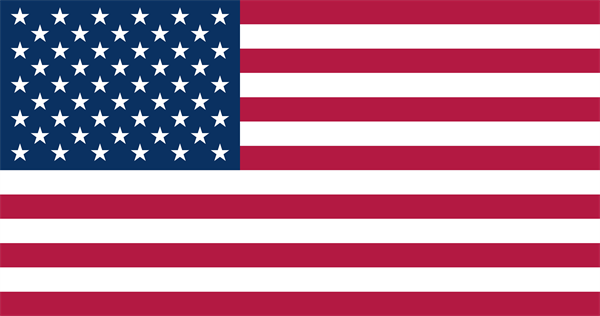
The stripes show the beginning, and the stars show today's states.
- Adopted and changed
- First design 14 June 1777; 50-star version 4 July 1960
Design
Seven red and six white stripes; in the upper left, a blue field with 50 white stars.
What it means
The 13 stripes represent the first 13 colonies, and the 50 stars represent the 50 states. Today red is explained as valour, white as purity and innocence, and blue as vigilance, perseverance and justice. These colour interpretations should not be presented as a detailed explanation given in the original 1777 resolution.
The story
As the United States grew, the stars on the flag multiplied. For a time the number of stripes was also increased; in 1818 the stripes were fixed so as to recall the first 13 colonies. New states continued to be shown by stars. After Hawaii became a state, the 50-star design came into use in 1960.
Flag of Canada
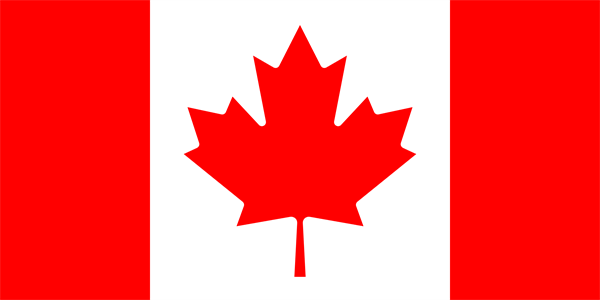
A single maple leaf became a shared and easily recognised symbol for Canada.
- Adopted and changed
- 15 February 1965
Design
Red fields on both sides; in the centre, a white square containing a red maple leaf with 11 points.
What it means
The maple leaf is one of Canada's long-used national symbols. The main idea of the design is the country's shared identity. The 11 points of the leaf do not count provinces or territories.
The story
For a long time Canada was represented by the Union Jack and the Canadian Red Ensign. In the 1960s the search for a new flag turned into a major public and parliamentary debate. The design chosen in 1964 was raised in 1965. The leaf was simplified so that it would look clearer in the wind and from a distance; the 11-point form was used instead of the original 13 points.
Flag of Mexico
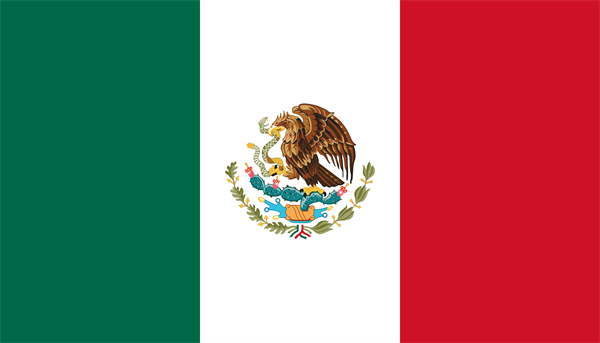
The eagle, snake and cactus bring Mexico's founding story onto the flag.
- Adopted and changed
- The present drawing of the coat of arms dates from 16 September 1968; the tricolour tradition dates from 1821.
Design
Vertical stripes of green, white and red, with a coat of arms on the white stripe showing an eagle holding a snake and perched on a cactus.
What it means
In 1821 the colours were explained as religion, independence and union. Today the interpretation of hope, unity and sacrifice for independence is also common. The coat of arms with the eagle recalls the Mexica people's account of the founding of Tenochtitlan.
The story
In the founding legend, the Mexica saw the eagle on a cactus as the sign showing where they should settle. Over time this account took its place at the centre of the state coat of arms. After independence, the tricolour flag joined indigenous history with the identity of the new state. The form and details of the eagle changed under different governments; the present drawing was adopted in 1968.
Flag of Guatemala
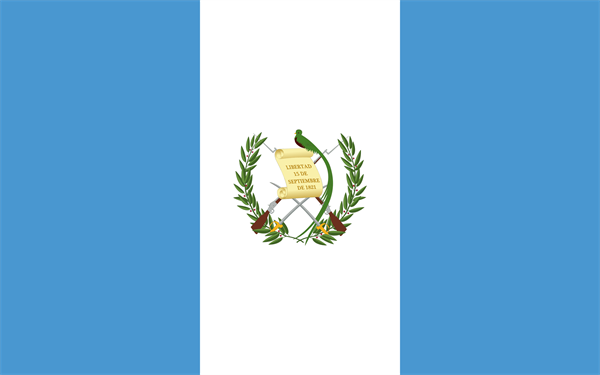
The quetzal bird on Guatemala's flag is a symbol of freedom.
- Adopted and changed
- 1871; standardised by later regulations
Design
Vertical light blue, white and light blue stripes; in state use, the coat of arms in the centre.
What it means
In the common explanation, the blue stripes represent the seas on either side of the country, and white represents peace. In the coat of arms, the quetzal represents freedom, the laurel victory, and the weapons the will to defend the country.
The story
Guatemala kept the blue-white colours of the Central American federation tradition. During the reforms of 1871 the stripes were made vertical. The scroll in the coat of arms bears 15 September 1821, the date of the region's independence from Spain.
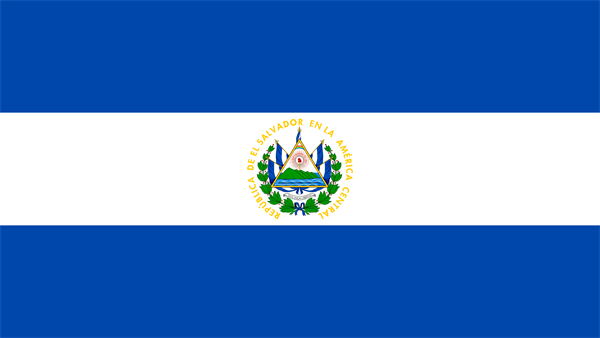
Flag of El Salvador
El Salvador's blue-and-white flag carries the memory of the old Central American union.
- Adopted and changed
- 17 May 1912
Design
Horizontal stripes of blue, white and blue; the state flag has the coat of arms in the centre.
What it means
The blues are linked with the two oceans and the white with peace. In the coat of arms, the five volcanoes evoke the five countries of the old federation, the triangle equality, and the rainbow peace.
The story
For a time El Salvador used a different flag with stars and stripes. In 1912 it returned to the colours of the Central American federation. The coat of arms in the centre brings together independence and the ideal of regional unity.
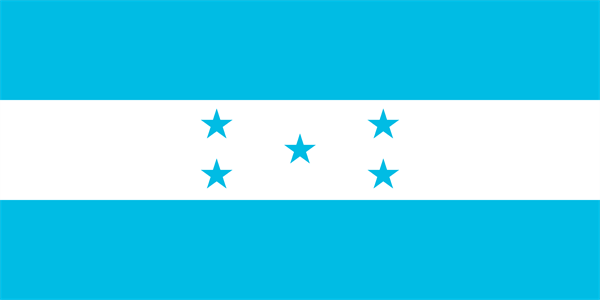
Flag of Honduras
The five stars of Honduras look back to the former Central American federation.
- Adopted and changed
- 1866; proportions regulated in 1949; return to turquoise in 2022
Design
Horizontal stripes of turquoise, white and turquoise; five turquoise stars on the white band.
What it means
The blue stripes are associated with the Pacific and Caribbean coasts, and white with peace. The five stars recall the historical union of Guatemala, El Salvador, Honduras, Nicaragua and Costa Rica.
The story
After the federation broke up, Honduras kept the blue and white colours. The five stars kept alive the ideal of regional unity. Although dark blue examples were common for a long time, in 2022 the historical turquoise colour came back to the fore in state use.
Sources: Flags of the World (specialist archive), blogs.unah.edu.hn
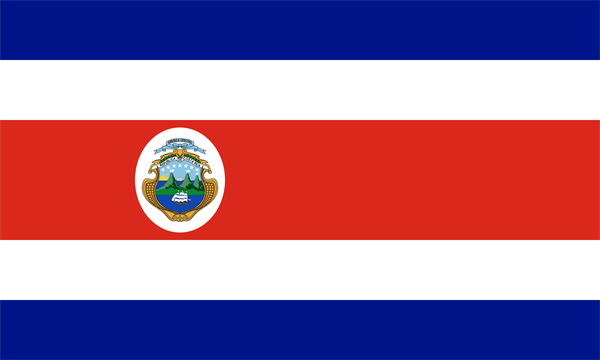
Flag of Costa Rica
Costa Rica added a wide red stripe to the blue-and-white tradition of Central America.
- Adopted and changed
- 29 September 1848; the coat of arms was changed later
Design
Horizontal stripes of blue, white, red, white and blue; the red stripe is twice as wide. The state version carries the coat of arms.
What it means
Blue is associated with the sky and ideals, white with peace, and red with vitality and sacrifice. In the coat of arms, the seas represent the country's two coasts and the seven stars represent its seven provinces.
The story
The 1848 design is associated with Pacífica Fernández, the wife of the president of the time. The French tricolour was a source of inspiration for the new arrangement. The older blue-and-white structure was set apart by the wide red stripe.
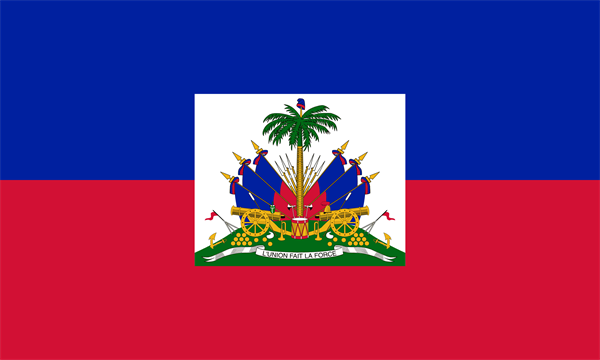
Flag of Haiti
The flag of Haiti carries the memory of the struggle for independence against colonial rule.
- Adopted and changed
- Tradition of 1803; blue and red restored in 1986 and defined in the 1987 Constitution
Design
Horizontal stripes of blue and red; in the national version, the coat of arms on a white panel in the centre.
What it means
Blue and red are associated with the communities that united for independence. In the coat of arms, the palm tree and the liberty cap represent independence, and the motto meaning "Union makes strength" represents solidarity.
The story
According to the common account, Jean-Jacques Dessalines removed the white part of the French tricolour, and Catherine Flon sewed the remaining colours together. This event is the founding story of the 1803 independence tradition. Black-and-red periods followed later; blue and red returned in 1986.
Flag of the Dominican Republic
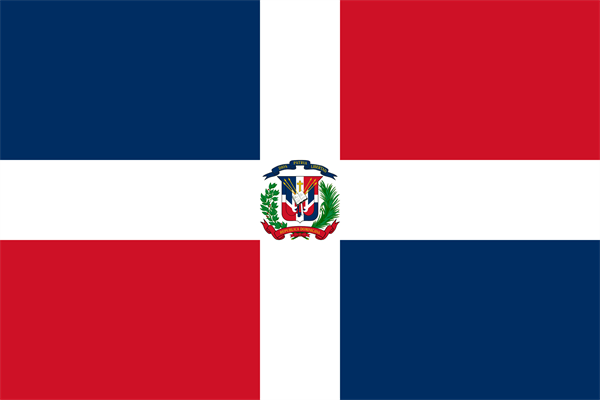
The white cross of the Dominican Republic joins its four coloured fields together.
- Adopted and changed
- 1844; constitutional adoption 6 November 1844
Design
Four blue and red sections separated by a white cross; the state coat of arms in the centre.
What it means
Blue is associated with freedom and protective ideals, red with the struggle for independence, and white with peace. The cross and the Bible in the coat of arms reflect the Christian tradition.
The story
The flag emerged in 1844 in connection with Juan Pablo Duarte's independence movement. The colours of the Haitian flag were used in a new arrangement, with a white cross added. The present alternating blue and red sections became established at this time.
Flag of Jamaica
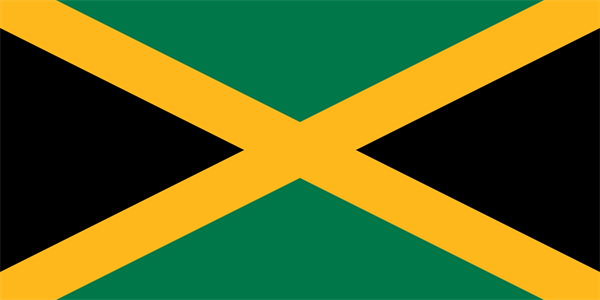
Jamaica's golden saltire joins the strength of the people with the sun and greenery.
- Adopted and changed
- 6 August 1962
Design
A golden diagonal cross; the top and bottom triangles are green, and the side triangles are black.
What it means
In the current official explanation, black represents the strength and creativity of the people, gold natural wealth and sunlight, and green hope and agricultural resources.
The story
The flag was prepared for independence. The diagonal arrangement was preferred after the first proposal with horizontal stripes turned out to resemble the flag of Tanganyika. The explanation of black as hardships, used in the past, was later renewed with an emphasis on strength and creativity.
Sources: jis.gov.jm, Flags of the World (specialist archive)
Flag of the Bahamas
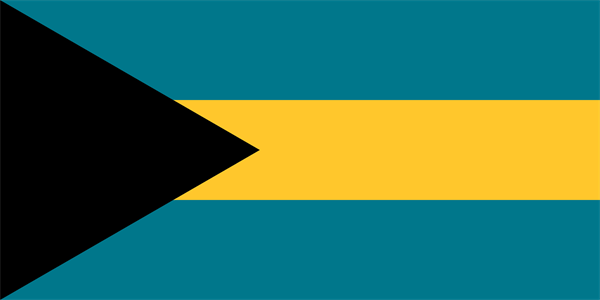
The Bahamas' flag places a symbol of strength between the sea and the sand.
- Adopted and changed
- 10 July 1973
Design
Horizontal stripes of aquamarine, gold and aquamarine; a black triangle at the hoist.
What it means
Aquamarine stands for the surrounding waters, gold for the sands and natural resources, and black for the strength and unity of the people. The triangle expresses this strength being directed at the country's resources.
The story
The flag was adopted at independence from the United Kingdom. The design combined the sea and coastal character of the island nation with the black triangle. In this way a look specific to the Bahamas replaced the colonial-era banner layout.
Flag of Puerto Rico
Territory
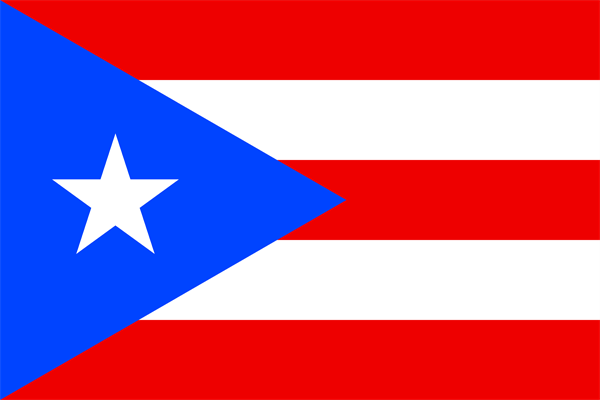
The flag of Puerto Rico came about by reversing the colour arrangement of the Cuban flag.
A territory associated with the United States; it should not be classified as an independent sovereign state.
- Type
- Territory
- Adopted and changed
- Designed 22 December 1895; officially adopted 25 July 1952
Design
Five horizontal stripes of red and white; at the hoist, a blue triangle with a white star.
What it means
In explanations after 1952, the star represents Puerto Rico and the triangle the three branches of government; white stands for freedom and rights, and red for the vital strength of government. Older interpretations from the independence movement are different.
The story
The flag was adopted at a 1895 meeting of Puerto Rican pro-independence supporters in New York. It began as a revolutionary symbol and became the island's official flag in 1952. This shift is an example of the same design gaining new meanings in different political periods.
Flag of Aruba
Country within the Kingdom of the Netherlands
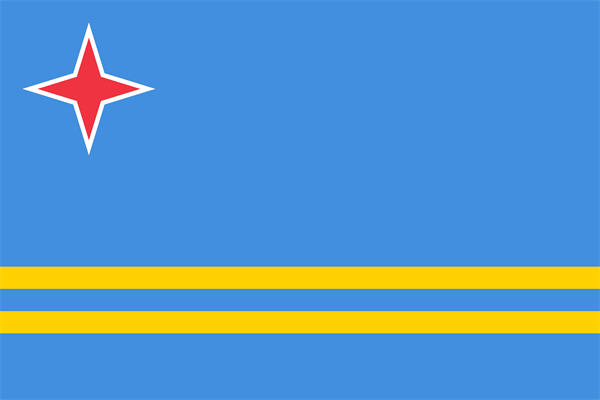
Aruba's four-pointed star describes the island and the people who came from different directions.
A separate country within the Kingdom of the Netherlands; it is not an independent sovereign state.
- Type
- Country within the Kingdom of the Netherlands
- Adopted and changed
- 18 March 1976
Design
A light blue field; a red four-pointed star with a white border at the upper left; two thin yellow stripes in the lower part.
What it means
Blue represents the sea, yellow abundance and economic resources, red love of the country, and white the sand of the shores and purity. The four points of the star are associated with the compass directions and with people who came from different origins.
The story
The flag was adopted in 1976, when Aruba was still part of the Netherlands Antilles. It was kept when the island moved to the status of a separate country within the Kingdom of the Netherlands in 1986. The yellow lines are also associated with the island's separate position.
A historical flag
Flag of the Netherlands Antilles
Historical entityHistorical flag
The flag of the Netherlands Antilles is the historical symbol of a political entity that no longer exists.
The Netherlands Antilles ended on 10 October 2010; AN is a historical code.
- Type
- Historical entity
- Adopted and changed
- Six stars in 1959; five stars from 1986 to 2010.
Design
A red vertical and a blue horizontal band on a white field, with five white stars in the blue area.
What it means
Red, white and blue represent the link with the Netherlands; the five stars represent the five island units that formed the entity after 1986.
The story
The first flag was adopted in 1959 with six stars. When Aruba moved to a separate status in 1986, one star was removed. The remaining five stars stood for Curaçao, Bonaire, Sint Maarten, Saba and Sint Eustatius. Because the Netherlands Antilles was dissolved on 10 October 2010, this flag should not be presented as the flag of a current country.
Versions and context
- Netherlands Antilles — 1986–2010: The final five-star version. The earlier 1959 version had six stars.
Sources: Flags of the World (specialist archive), government.nl